Oct 17, 2025
Joint pain often starts subtly — a little stiffness in the knees, soreness in the shoulders, or discomfort after activity. These are often signs of early joint degeneration, when cartilage and surrounding tissues begin to wear down. Fortunately, regenerative medicine offers new hope for restoring joint health before these early issues turn into chronic pain or arthritis.
Understanding Early Joint Problems
Our joints are built to move smoothly, cushioned by cartilage, lubricated by joint fluid, and supported by strong ligaments and tendons. Over time, however, wear and tear, injury, or inflammation can damage these structures.
Early joint problems may include:
- Mild stiffness or aching after activity
- Pain when bending or climbing stairs
- Swelling or tenderness around the joint
- Decreased flexibility or “creaking” sensations
At this early stage, the joint still has the potential to heal — especially with regenerative treatments that help the body repair and rebuild healthy tissue.
How Regenerative Medicine Works
Regenerative medicine focuses on stimulating the body’s natural healing processes. Rather than just masking symptoms with medication or injections, regenerative therapies aim to restore tissue health, reduce inflammation, and improve joint function.
These treatments use the body’s own biological materials — like platelets or stem cells — to encourage tissue repair and regeneration where it’s needed most.
Common Regenerative Treatments for Early Joint Damage
1. Platelet-Rich Plasma (PRP) Therapy
PRP therapy involves concentrating platelets from your own blood and injecting them into the affected joint. These platelets contain powerful growth factors that:
- Stimulate tissue repair
- Reduce inflammation
- Promote collagen and cartilage regeneration
PRP can be used for early joint problems in the knees, shoulders, hips, or other joints — helping restore comfort and mobility naturally.
2. Stem Cell Therapy
Stem cell therapy introduces healing cells — usually derived from bone marrow or adipose (fat) tissue — into the damaged joint. These cells can help rebuild cartilage, improve cushioning, and restore balance within the joint environment.
Early research suggests stem cell therapy may slow or even reverse early degenerative joint changes, helping patients avoid or delay more invasive procedures like joint replacement.
3. Prolotherapy
Prolotherapy uses a natural dextrose-based solution injected around weakened ligaments and tendons to trigger the body’s repair response. This mild inflammation promotes the growth of stronger connective tissue, improving joint stability and function.
Over time, this can reduce pain caused by instability or early joint wear.
Benefits of Early Regenerative Intervention
Addressing joint problems early can prevent more serious degeneration and preserve mobility. The benefits of regenerative therapies include:
- Minimally invasive procedures with little to no downtime
- Reduced need for pain medications or steroids
- Improved joint strength and flexibility
- Potential long-term relief by promoting true healing rather than masking symptoms
Is Regenerative Treatment Right for You?
Regenerative therapies may be ideal if you’re experiencing mild to moderate joint pain, early arthritis, or mobility issues that haven’t improved with rest, physical therapy, or standard treatments.
A pain management or orthopedic specialist can evaluate your condition through imaging and examination to determine whether PRP, stem cell therapy, or prolotherapy is the right approach for your needs.
A Future-Focused Approach to Joint Care
Regenerative treatments are changing how we approach joint pain — emphasizing healing, repair, and long-term joint preservation. For those with early joint problems, these therapies offer a proactive, restorative way to protect joint health and maintain an active lifestyle.
If you’ve noticed stiffness or joint discomfort, now is the time to explore regenerative options. Early action can make all the difference in keeping your joints healthy and pain-free for years to come.
Sep 18, 2025
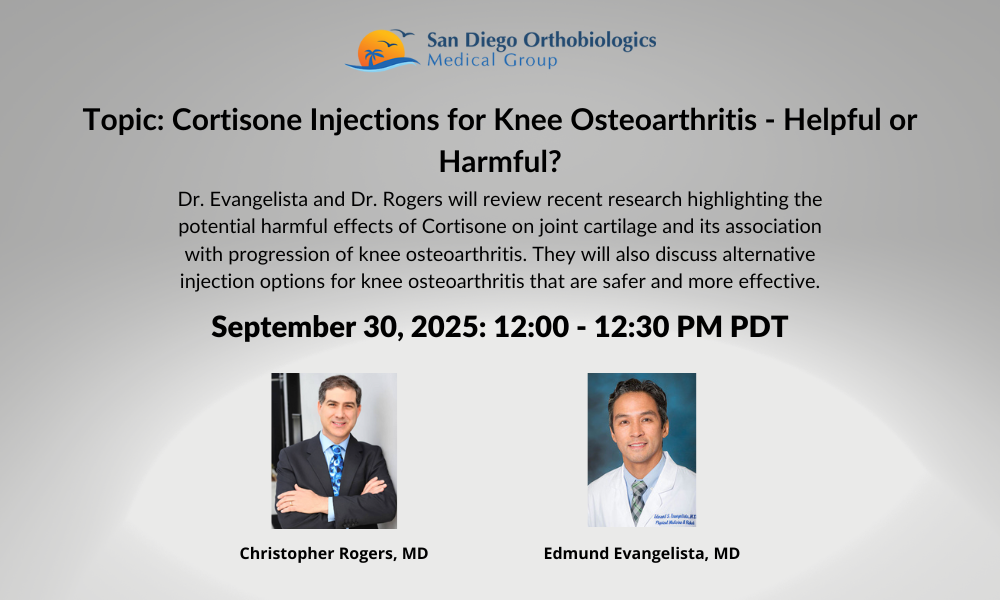
Join Dr. Evangelista and Dr. Rogers as they discuss recent findings regarding the potential harmful side effects of Cortisone injections for knee osteoarthritis.
WHEN: Tuesday, September 30, 2025
TIME: 12pm PDT
Click HERE to register for the free webinar.

Sep 12, 2025
Regenerative medicine, including therapies like platelet-rich plasma (PRP), stem cell therapy, and other biologic injections, offers exciting possibilities for healing chronic pain and musculoskeletal injuries. While these treatments can stimulate the body’s natural repair processes, your preparation and aftercare play an important role in recovery and results.
Here are some practical tips to help you prepare for your procedure and ensure a smooth recovery:
1. Follow Pre-Treatment Instructions
Your provider will likely give you specific guidelines before your treatment. This may include stopping certain medications (like anti-inflammatories or blood thinners), avoiding alcohol, and staying hydrated. Following these directions carefully can optimize your results.
2. Support Your Body with Proper Nutrition
Good nutrition helps your body heal. Focus on a diet rich in lean proteins, leafy greens, fruits, whole grains, and healthy fats. Foods rich in vitamin C, zinc, and omega-3s support tissue repair and reduce inflammation naturally. Staying well hydrated is equally important.
3. Plan for Downtime
While regenerative treatments are minimally invasive, your body still needs time to heal. Depending on the procedure, you may need to limit certain activities for a few days or weeks. Arrange your schedule so you have time to rest and avoid overexertion.
4. Prepare Your Home Environment
Make recovery easier by preparing in advance:
- Have comfortable seating with pillows for support.
- Keep frequently used items within reach.
- Stock up on healthy snacks and easy-to-prepare meals.
- If mobility will be limited, consider arranging temporary help with chores.
5. Avoid Overuse of Treated Areas
It can be tempting to test improvements right away, but pushing your body too soon may slow healing. Follow your provider’s instructions on activity levels, physical therapy, and exercise. Gradual return to movement is key.
6. Commit to a Healing Mindset
Stress management, patience, and mental wellness are part of recovery. Techniques like meditation, breathing exercises, or journaling can help you stay positive and reduce anxiety while your body heals.
7. Stay Consistent with Follow-Up Care
Regenerative medicine is often a process rather than a one-time fix. Attend follow-up appointments, participate in recommended physical therapy, and communicate openly with your provider about your progress.
Final Thoughts
Regenerative treatments can be life-changing, but the best results come from being proactive and engaged in your own recovery. By preparing your body, planning your environment, and following professional guidance, you’ll give yourself the best chance for a smoother recovery and long-term benefits.

Jul 16, 2025
Joint pain can creep in slowly or hit suddenly—but either way, it can impact your mobility, mood, and overall quality of life. Whether you’re dealing with age-related wear and tear, chronic inflammation, or recovering from an injury, adopting everyday habits that support joint health can make a world of difference. The good news? You don’t always need a prescription to find relief. A few simple lifestyle adjustments can go a long way in keeping your joints strong, flexible, and pain-free.
Here are natural, evidence-backed habits you can incorporate into your daily life to support your joints and reduce discomfort.
1. Keep Moving—But Move Smart
Movement is medicine for your joints. Staying active helps lubricate the joints, strengthen surrounding muscles, and maintain a healthy range of motion.
- Low-impact exercises like walking, swimming, biking, and yoga are excellent choices.
- Strength training helps stabilize joints and reduce stress on them.
- Stretching regularly keeps muscles flexible and reduces stiffness.
Tip: Avoid long periods of inactivity. If you sit at a desk, stand up and stretch every hour.
2. Maintain a Healthy Weight
Carrying excess weight puts unnecessary pressure on weight-bearing joints—especially the knees, hips, and lower back. In fact, for every extra pound you carry, your knees experience about four extra pounds of pressure.
- Shedding even 5–10% of your body weight can significantly reduce joint strain and pain.
- Focus on slow, sustainable weight loss through diet and exercise.
Bonus: Weight loss also lowers systemic inflammation, which can ease joint pain.
3. Prioritize Anti-Inflammatory Nutrition
What you eat has a direct impact on your inflammation levels and joint health. Incorporating anti-inflammatory foods can help reduce pain naturally.
- Foods to eat: Fatty fish (like salmon), leafy greens, berries, olive oil, turmeric, ginger, nuts, and seeds.
- Foods to limit: Sugar, red meat, processed snacks, and fried foods.
Tip: A Mediterranean-style diet is particularly joint-friendly.
4. Stay Hydrated
Cartilage—the flexible tissue that cushions your joints—is made mostly of water. Staying hydrated keeps this tissue lubricated and reduces friction during movement.
- Aim for at least 8–10 glasses of water per day, more if you’re active or in a hot climate.
- Herbal teas and water-rich fruits like watermelon and cucumber also count toward hydration.
Dehydration can cause joint stiffness and increased sensitivity to pain.
5. Support Your Joints with Supplements
Certain natural supplements have been shown to support joint health and reduce inflammation.
- Glucosamine and chondroitin: May help rebuild cartilage and reduce pain.
- Turmeric/curcumin: A powerful anti-inflammatory.
- Omega-3 fatty acids: Found in fish oil, these reduce inflammation system-wide.
- Collagen peptides: Support cartilage and connective tissue integrity.
Always consult your healthcare provider before starting a new supplement.
6. Use Proper Posture and Ergonomics
Slouching or using improper body mechanics can stress your joints over time. Make small adjustments to support joint alignment throughout the day.
- Sit with your back straight, feet flat on the ground, and shoulders relaxed.
- Use supportive chairs or standing desks as needed.
- When lifting objects, use your legs—not your back—and keep items close to your body.
Ergonomic tweaks at your workstation can prevent repetitive stress injuries.
7. Get Plenty of Restful Sleep
Quality sleep is essential for healing and reducing inflammation. During deep sleep, your body produces hormones that repair tissue and regulate immune response.
- Aim for 7–9 hours of sleep per night.
- Create a calming bedtime routine: turn off screens, dim the lights, and avoid caffeine late in the day.
- Consider supportive pillows or a mattress that helps align your spine and joints.
Poor sleep is linked to increased perception of pain and joint stiffness.
8. Manage Stress Effectively
Chronic stress triggers the release of cortisol, a hormone that can promote inflammation in the body. Reducing stress can ease both physical and emotional tension that often worsens joint pain.
- Try meditation, deep breathing exercises, journaling, or spending time in nature.
- Make time for hobbies, connection with others, and digital detoxes.
Mind-body practices like tai chi and yoga offer both physical and mental relief.
9. Avoid Smoking and Excess Alcohol
Smoking reduces blood flow to joints and damages connective tissue. Meanwhile, excessive alcohol can deplete your body of nutrients and contribute to inflammation.
- If you smoke, seek out resources to quit—it can significantly improve joint and overall health.
- Drink alcohol in moderation, if at all.
Small lifestyle changes add up over time—quitting smoking is one of the most impactful things you can do for joint health.
10. Listen to Your Body
One of the most underrated habits is simply tuning in to your body’s signals. If an activity causes joint pain or stiffness, it may be a sign you need rest or a modification.
- Alternate between activity and rest.
- Don’t push through sharp or persistent joint pain.
- See a healthcare provider if symptoms don’t improve or worsen.
Early intervention can prevent long-term joint damage.
Final Thoughts
You don’t need to overhaul your life to take better care of your joints. By adopting small, consistent habits—like staying active, eating anti-inflammatory foods, and managing stress—you can support your body’s natural ability to maintain strong, pain-free joints.
These habits are powerful on their own but even better when practiced together. Start with one or two changes today and build on your progress each week. Your joints will thank you for years to come.
Jun 18, 2025
Regenerative medicine has emerged as a groundbreaking frontier in healthcare, offering hope to those suffering from chronic pain, degenerative conditions, and tissue injuries. This field harnesses the body’s natural healing abilities to restore or replace damaged tissues, reduce inflammation, and improve function. From platelet-rich plasma (PRP) therapy to stem cell treatments, regenerative therapies are transforming how we approach recovery and long-term wellness.
But not everyone is an ideal candidate. Understanding whether regenerative medicine is right for you is crucial to getting the best results. If you’ve been considering this innovative approach, here are five signs you might be a good candidate for regenerative medicine treatments.
Signs You Are a Good Candidate for Regenerative Medicine Treatments
1. You Have a Musculoskeletal Injury or Chronic Joint Pain
Regenerative medicine has shown particular promise in treating orthopedic conditions, especially those involving joints, tendons, ligaments, and cartilage. Whether it’s a sports injury like a torn meniscus or rotator cuff, or chronic issues such as osteoarthritis, regenerative therapies can help repair damaged tissues and reduce inflammation.
If you’ve been struggling with:
- Knee, shoulder, or hip pain
- Tendonitis or bursitis
- Cartilage degeneration
- Minor ligament tears
…you may be a strong candidate for treatments like stem cell therapy or PRP injections. These approaches aim to accelerate the body’s natural healing process, potentially helping you avoid invasive surgery or long-term use of pain medications.
Bonus Tip: If you’re in the early to moderate stages of arthritis or injury, you’re more likely to benefit from regenerative treatments than if your joint is severely damaged or completely worn down.
2. Conservative Treatments Haven’t Worked
If you’ve already tried physical therapy, rest, steroid injections, and anti-inflammatory medications without success, regenerative medicine may be your next step. Many patients turn to regenerative therapies when they reach a plateau in traditional treatment or want to avoid more aggressive interventions like surgery.
Patients often choose regenerative medicine because:
- They want a more natural approach to healing.
- They are looking for a longer-term solution instead of a temporary fix.
- They’ve exhausted other non-surgical methods without lasting relief.
It’s important to understand that regenerative treatments are not a quick fix. They work by stimulating the body’s healing mechanisms, which may take weeks or even months to show full results. But for many, the wait is worth the long-term improvement.
3. You’re in Generally Good Health
Your overall health plays a significant role in determining whether regenerative medicine will be effective. While these therapies are minimally invasive and low-risk, your body needs to be in a relatively good state to respond optimally to treatment.
Ideal candidates typically:
- Are not smokers or are willing to quit (smoking impairs healing).
- Are not severely overweight or are actively working on weight management.
- Have stable blood sugar levels (uncontrolled diabetes can interfere with cell healing).
- Are free from active infections or cancer.
Good health doesn’t mean you have to be an elite athlete—it just means your body can efficiently participate in the healing process. If you’re not sure whether your health status qualifies, a qualified regenerative medicine specialist can help evaluate your risk factors and determine the safest approach.
4. You Want to Avoid Surgery
Surgery isn’t always the best or most desirable option, especially when it comes with extended downtime, risks, and unpredictable outcomes. Regenerative medicine appeals to many people because it offers a non-surgical alternative that may still provide meaningful relief and functional improvement.
If you’re considering surgery but:
- Want to try a less invasive option first
- Need to avoid lengthy recovery due to work or lifestyle
- Have already had one surgery and don’t want another
- Have been told you’re not an ideal surgical candidate
…then regenerative therapies may be an appropriate avenue to explore.
For example, some patients with degenerative disc disease or mild meniscus tears can avoid or delay surgery through stem cell or PRP treatments, which aim to reduce pain and improve mobility naturally. While not a guaranteed substitute for surgery, these therapies may help manage symptoms and extend the life of your joints or tissues.
5. You’re Committed to a Holistic Recovery Process
Regenerative medicine is part of a bigger picture—one that includes lifestyle, nutrition, physical therapy, and patient mindset. The most successful outcomes often come from individuals who are proactive, disciplined, and patient.
Ask yourself:
- Are you willing to follow post-treatment care recommendations?
- Will you commit to physical therapy or exercise as advised?
- Are you open to dietary or behavioral changes that support healing?
- Do you have realistic expectations about gradual improvement?
These treatments are not magic bullets. They’re catalysts for your body’s natural healing systems, and that process takes time and effort. Being engaged and proactive in your care significantly increases your chances of a positive outcome.
A Final Thought: Not Everyone is a Candidate—And That’s Okay
Regenerative medicine is not a one-size-fits-all solution. While it holds exciting promise for many, there are circumstances where it might not be the best choice. Severe joint deformities, complete tissue loss, or advanced systemic diseases may limit the effectiveness of these therapies.
That’s why a comprehensive evaluation with a regenerative medicine specialist is critical. A qualified provider will assess your medical history, imaging, lifestyle, and goals to determine whether you’re likely to benefit—and they won’t recommend it unless they genuinely believe it can help you.
Conclusion
Regenerative medicine offers a path toward healing that emphasizes the body’s innate ability to recover, repair, and rejuvenate. If you’re dealing with persistent joint or tendon issues, have tried conservative treatments without success, are in good overall health, and are motivated to avoid surgery through a more natural and holistic route, you might be an excellent candidate.
The best first step? Schedule a consultation with a trusted provider specializing in regenerative therapies at San Diego Orthobiologics Medical Group. With a personalized evaluation and guidance, you can discover whether this innovative treatment could be the breakthrough your body has been waiting for.
Interested in learning more about regenerative medicine?
Our clinic offers in-depth assessments and cutting-edge regenerative therapies tailored to your needs. Contact us today to book a consultation and take the next step toward lasting relief and better function—naturally.
Jun 13, 2025
Joint pain is one of the most common and debilitating health concerns affecting millions worldwide. Whether it stems from osteoarthritis, injury, or chronic overuse, the damage to cartilage and connective tissues can significantly reduce mobility and quality of life. In recent years, cellular therapy has emerged as a promising alternative to conventional treatments like medications, steroid injections, and even surgery. But how does it work, and does the science back the hype? Let’s dive into the mechanisms, evidence, and potential of cellular therapy to repair damaged joints.
What is Cellular Therapy?
Cellular therapy, often referred to as regenerative medicine, involves using a patient’s own cells to repair or regenerate damaged tissues. In the context of joint repair, the most common types of cellular therapy include:
-
Stem cell therapy: Typically using mesenchymal stem cells (MSCs) derived from bone marrow, adipose tissue, or umbilical cords.
-
Platelet-rich plasma (PRP): A concentrate of platelets derived from the patient’s own blood, rich in growth factors that stimulate healing.
The Science Behind Joint Damage
To understand how cellular therapy might work, it’s helpful to know what happens when joints are damaged. Healthy joints are cushioned by cartilage, a smooth and slippery tissue that enables frictionless movement. However, cartilage has a limited ability to heal because it lacks a blood supply. When it wears down due to injury or disease, the body struggles to regenerate the lost tissue.
This leads to symptoms like:
Traditional treatments typically aim to manage symptoms rather than repair tissue. This is where cellular therapy seeks to make a game-changing impact—by stimulating the body to heal itself.
How Cellular Therapy Works
1. Stem Cell Therapy
Mesenchymal stem cells (MSCs) are multipotent, meaning they can differentiate into various cell types, including chondrocytes, the cells responsible for producing cartilage. When injected into the joint, these stem cells are believed to:
-
Reduce inflammation
-
Stimulate the repair of cartilage
-
Recruit other healing cells to the area
-
Modulate immune responses
Moreover, stem cells secrete bioactive molecules (cytokines and growth factors) that contribute to the repair environment. It’s not just about replacing cells—it’s about kick-starting the body’s healing process.
2. Platelet-Rich Plasma (PRP)
PRP therapy involves drawing a patient’s blood, centrifuging it to concentrate the platelets, and injecting it into the injured joint. Platelets are a natural source of growth factors, including:
-
Platelet-derived growth factor (PDGF)
-
Transforming growth factor-beta (TGF-β)
-
Vascular endothelial growth factor (VEGF)
These molecules can stimulate tissue repair, reduce inflammation, and improve pain. While PRP doesn’t contain stem cells, it can enhance the microenvironment to support natural regeneration.
What Does the Research Say?
Stem Cells: Promising but Preliminary
Numerous animal and early human studies have shown that stem cell injections can:
A 2020 meta-analysis published in The American Journal of Sports Medicine found that patients receiving MSC therapy for knee osteoarthritis showed significant improvements in pain and function compared to controls. However, these benefits vary based on factors like cell source, dosage, and disease severity.
Still, it’s important to note that most studies are small and short-term. Large-scale, randomized controlled trials (RCTs) are still needed to validate the long-term safety and effectiveness of stem cell therapy.
PRP: Growing Clinical Support
PRP has a more robust clinical foundation, particularly in treating mild to moderate osteoarthritis. Studies have shown that PRP is more effective than hyaluronic acid injections (another common joint treatment) in reducing pain and improving joint function.
In 2021, the Journal of Orthopaedic Research published a study indicating that PRP was effective in reducing knee pain for up to 12 months in osteoarthritis patients. While results are modest, PRP is considered relatively low-risk and widely used by sports medicine physicians.
Risks and Limitations
While cellular therapy holds enormous promise, it’s not without risks or limitations:
-
Lack of standardization: There is no universal protocol for dosage, preparation, or delivery.
-
Variable outcomes: Some patients experience dramatic improvement, while others see little to no benefit.
-
Regulatory status: The FDA tightly regulates stem cell therapies, and many offerings at clinics are not approved or lack scientific validation.
-
Cost: These treatments are often expensive and not covered by insurance.
Patients should exercise caution and consult with a specialist experienced in regenerative medicine before undergoing any procedure.
The Future of Cellular Therapy
Research is advancing rapidly, and future developments may include:
-
Gene-edited stem cells that are more effective at cartilage regeneration
-
Personalized medicine approaches using a patient’s unique cellular profile
-
Combined therapies, such as PRP with stem cells or scaffolds that support new tissue growth
Clinical trials are ongoing, and within the next decade, cellular therapies may become a routine part of managing joint degeneration, potentially delaying or even eliminating the need for joint replacement surgery.
Conclusion: Hype or Hope?
Cellular therapy is not a miracle cure, but it does represent a hopeful shift toward treating the root cause of joint pain rather than just the symptoms. The science is encouraging—especially for PRP and stem cell therapies—but we are still in the early stages of understanding who benefits most, how treatments should be delivered, and what long-term outcomes will look like.
For those suffering from joint pain and exploring alternatives to surgery, cellular therapy may offer a science-backed, minimally invasive option worth discussing with a medical professional. As research continues, we’re likely to see cellular therapy play an increasingly important role in the future of orthopedic and sports medicine.